Minister of State Discusses Building Yemeni Women’s capacities with Italian Ambassador
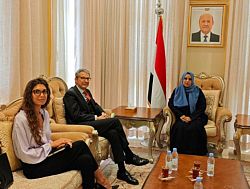
The Minister of State for Women’s Affairs, Dr. Ahd Jaasous discussed Saturday with the Italian Ambassador to Yemen Carlo Baldocci ways to strengthen joint cooperation in the areas of women’s economic empowerment and capacity building.
Arab League Calls for Confronting Rising Anti-Muslim Hate
The Arab League on Sunday called for intensified international efforts to confront the growing phenomenon of hate speech and discrimination against Muslims in order to prevent deeper divisions among religions and cultures.

Oil price tops $100 a barrel
Oil prices jumped above $100 per barrel today, Monday, as the U.S. Navy prepares to take control of ship movements in the Strait of Hormuz.

Inter Milan a win away from Serie A title
Inter Milan continued its successful march to reclaim the Italian football league title, despite drawing with its host Torino (2-2), in the conclusion of the 34th round of the competition.
Last Update: ،
2026/05/02
Time
09:06:34
Latest News:
 Yemeni Coast Guard Locates Oil Tanker Hijacked off Shabwa Coast
Minister of Human Rights Reviews Conditions of Inmates at Aden Central Prison
Al-Arada Confers with British Ambassador over Assisting Government's Reforms Program
Al-Barakani celebrates EU Ambassador's tour in Taiz, highly appreciates EU interventions
Minister of Education Discusses Partnership with "Pure Hands"
Latest News:
Yemeni Coast Guard Locates Oil Tanker Hijacked off Shabwa Coast
Minister of Human Rights Reviews Conditions of Inmates at Aden Central Prison
Al-Arada Confers with British Ambassador over Assisting Government's Reforms Program
Al-Barakani celebrates EU Ambassador's tour in Taiz, highly appreciates EU interventions
Minister of Education Discusses Partnership with "Pure Hands"
PM says Houthi rebels collected YR 846 bln revenues last year
[22/09/2018 02:33]
CAIRO-SABA
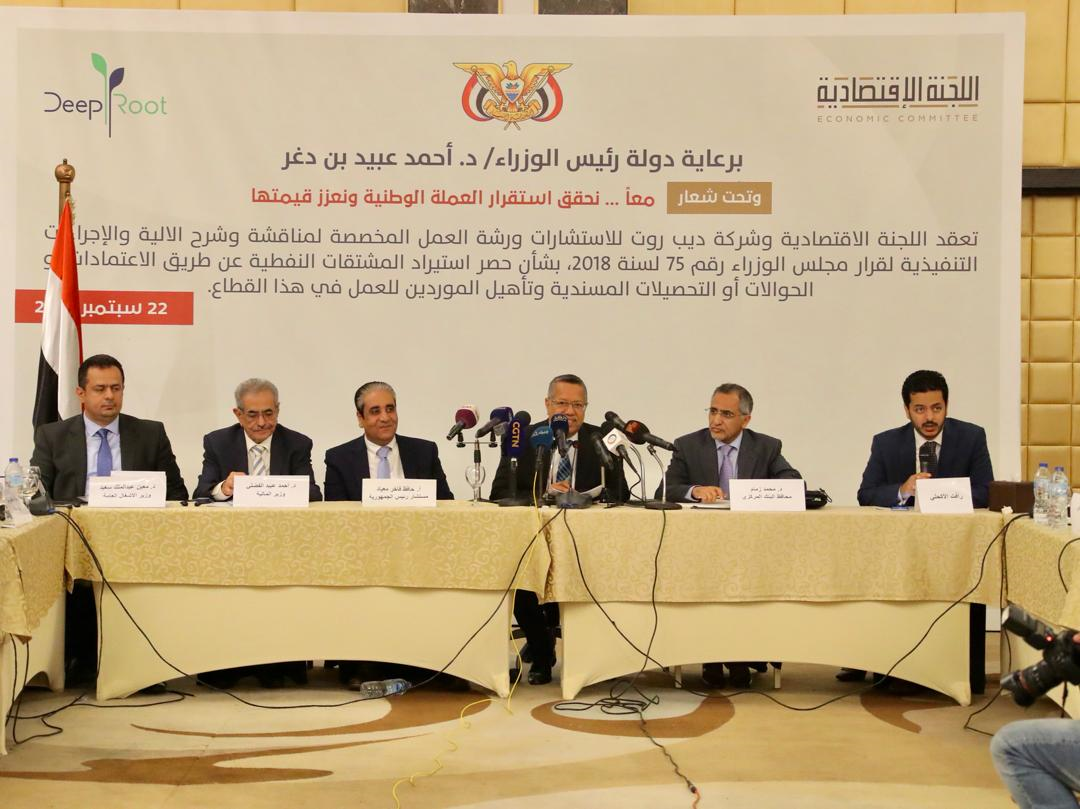
Prime Minister Ahmed bin-Daghr said the Houthi rebels collected revenues worth 846 billion Yemeni Riyals last year and pumped it into the market to buy US dollars.
In a seminar held by the national Economic Committee under the slogan "Together We (should) Stabilize the Riyal" in the Egyptian capital on Saturday, bin-Daghr cited a number of Houthi financial abuses that led to the depreciation of the Riyal against the US dollar.
He said the Sana'a-based rebels "collected the revenues from taxes, customs, and other levies that Houthis made religiously (compulsory) such as the Khomos (fifth of individuals' income )."
"Not taking these funds directly to the central bank and commercial banks …is another cause of the collapse of the national currency," he said referring to Houthi practices.
"The leaders of the coupist militia injected nearly 200 billion Riyals all at once to the local market to get it replaced with newly printed banknotes and with foreign currencies," he added.
Going chronically backwards in the militia's abuses, he said: " After looting the country's reservoir of hard currency, and two trillion Yemeni Riyals and hoarded them all in their stores (starting from 2014), the militia's leaders injected the Riyals again into the market giving the national currency a deep stab."
Key words:
individuals' - depreciation - religiously - chronically - SABA Prime - "collected - compulsory - currencies - commercial - Committee -
Minister of State Discusses Building Yemeni Women’s capacities with Italian Ambassador
Yemeni Coast Guard Locates Oil Tanker Hijacked off Shabwa Coast
Minister of Human Rights Reviews Conditions of Inmates at Aden Central Prison
Al-Arada Confers with British Ambassador over Assisting Government's Reforms Program
Al-Barakani celebrates EU Ambassador's tour in Taiz, highly appreciates EU interventions
Minister of Education Discusses Partnership with "Pure Hands"
Young Man Seriously Wounded by Houthi Sniper North of Taiz
Al-Subaihi: We need to step up efforts to promote transport businesses
EU Ambassador: Taiz Stands Out for Diversity, Earns EU Backing for Recovery and Development
Central Bank Board Reviews Economic Developments, Policy Responses