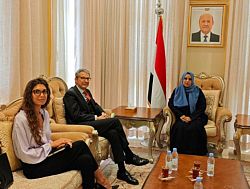
Minister of State Discusses Building Yemeni Women’s capacities with Italian Ambassador
The Minister of State for Women’s Affairs, Dr. Ahd Jaasous discussed Saturday with the Italian Ambassador to Yemen Carlo Baldocci ways to strengthen joint cooperation in the areas of women’s economic empowerment and capacity building.
Arab League Calls for Confronting Rising Anti-Muslim Hate
The Arab League on Sunday called for intensified international efforts to confront the growing phenomenon of hate speech and discrimination against Muslims in order to prevent deeper divisions among religions and cultures.

Oil price tops $100 a barrel
Oil prices jumped above $100 per barrel today, Monday, as the U.S. Navy prepares to take control of ship movements in the Strait of Hormuz.

Inter Milan a win away from Serie A title
Inter Milan continued its successful march to reclaim the Italian football league title, despite drawing with its host Torino (2-2), in the conclusion of the 34th round of the competition.
Last Update: ،
2026/05/02
Time
10:54:54
Latest News:
 Yemeni Coast Guard Locates Oil Tanker Hijacked off Shabwa Coast
Minister of Human Rights Reviews Conditions of Inmates at Aden Central Prison
Al-Arada Confers with British Ambassador over Assisting Government's Reforms Program
Al-Barakani celebrates EU Ambassador's tour in Taiz, highly appreciates EU interventions
Minister of Education Discusses Partnership with "Pure Hands"
Latest News:
Yemeni Coast Guard Locates Oil Tanker Hijacked off Shabwa Coast
Minister of Human Rights Reviews Conditions of Inmates at Aden Central Prison
Al-Arada Confers with British Ambassador over Assisting Government's Reforms Program
Al-Barakani celebrates EU Ambassador's tour in Taiz, highly appreciates EU interventions
Minister of Education Discusses Partnership with "Pure Hands"
Military operations won't stop until all Yemeni territory is liberated, says Hadi
[19/12/2017 02:33]
RIYADH-SABA
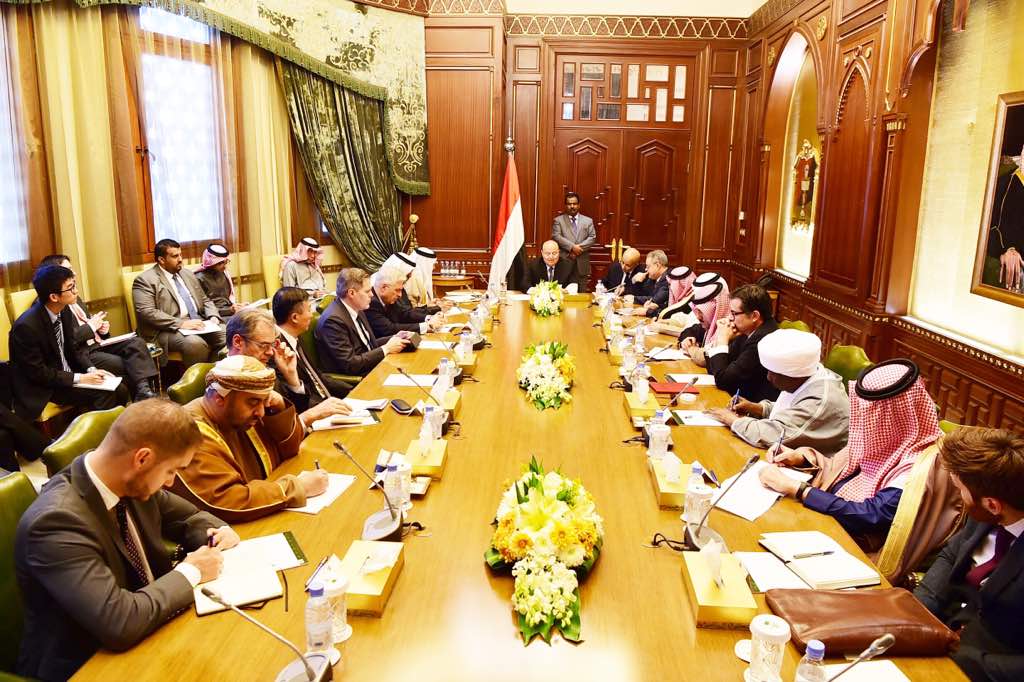
President Abd-Rabbu Mansour Hadi said the military operations will not stop until all the Yemeni territory is liberated (from the Houthi rebel fighters).
In a meeting with the Ambassadors of the G19 supporting Yemen, Hadi said no dialogue or consultations can be held if not according to the three relevant terms of reference which provide for ending the state of rebel military takeover, their handover of weapons to the state and withdrawal from cities and state institutions.
Hadi briefed the diplomats on the latest developments and danger of the radical rebel fighters as a dynastical and sectarian religious armed group that does not believe in peace and the handover of weapons to the state. Hadi said holding talks with the group even if the weapons is still in their hands is "a waste of time, a free service to the militia and a stark betrayal to the Yemeni people who are desperate for salvation, peace and security."
Hadi related Yemen's trajectory from 2011 to the present moment setting out how Yemen edged close to civil war in 2011 when pro-democracy protesters faced off with the then regime and reached a stalemate; the GCC states through the well-known GCC Agreement brokered a peaceful handover of power and a transitional period and national transformation talks (known as the National Dialogue Conference 2013-2014); the inclusive talks addressed the drivers of all Yemen's conflicts and including 50 year old grievances; and Yemenis agreed on everything and drafted a constitution and were about to organize a referendum on it before traditional elite of Saleh's regime in alliance with the Iran-aligned Houthis to commit the crime of military overthrow of the state. They
Hadi said the allied rebels restored the military institutions which he had not finished restructuring because of deeply entrenched loyalties to the former regime and sectarian loyalties.
"Politics was then destroyed, political parties were confiscated and the government was put under house arrest," said Hadi talking about late 2014 events.
Hadi said that after he escaped house arrest in Sana'a to Aden, the militia began using the army's warplanes in Sana'a to bomb Aden and other cities upon directives from outside the state institutions.
"I did my constitutionally authorized duty of protecting my country from the entire fall to the hands of the barbaric guerilla by inviting my brethren in the Kingdom of Saudi Arabia for help, which led to the formation of the Arab Coalition" that has been helping Yemen.
Hadi said that although the UN Security Council issued its decisions that bind the militias to fully withdraw from the Yemeni cities and hand over weapons and state institutions, the militias paid no attention to them.
"During the war we tried by all means to save our country the dangers and minimize the cost of the war and so we and our Arab brethren arranged for talks. We sat with the militia for peace talks and offere a lot of concessions. But their intransigence wasted all peace opportunities, in all the talks of Geneva, Biel and of Kuwait."
He cited the most recent peace proposal, the one offered by the UN envoy to Yemen Ismail Ould Chiekh concerning the management of the Red Sea port city of Hodeidah. Hadi said "the government reacted positively with the proposal of
Hodeida but the rebels were rigid" and rebuffed the proposal.
"With the progress of time the humanitarian situation worsens and suffering intensifies especially as the militia uses all state resources and the withheld public salaries for financing their insurgency."
Hadi also cited the radical militia's "recent atrocities in Sana'a and the killing of their former ally Saleh and the head of Saleh's negotiation team" Aref Azooka as Saleh's camp's renounced rebellion and called for talks with the government.
They have conducted a campaign of arrestes, killing, intimidations and bombing of houses of GPC members, said Hadi referring to the Houthis' abuses in their strongholds in north Yemen. "(These acts) reflect the militia's lack of readiness and capacity for peace." As long as the military power is in their hands we believe that peace with them is impossible," said Hadi.
He said that they turned the capital Sana'a into " a big prison" for GPC members and all oppositionists.
Hadi said that he is trying to regroup the Houthi-fractured GPC and has "opened doors to all those who suffered persecution at the hands of the Houthis."
"We also treated the family of Saleh in a humanitarian way, according to the Islamic morals and national customs but we account Saleh's era as a bygone era." "In any case this exists as a text in the international resolutions; "turning Saleh's page."
"We affirm the government's seriousness in tackling the humanitarian situation and mitigating the suffering. But we refuse any attempts to use the humanitarian matter as a card for pressuring the government and the Arab Coalition without accounting other aspects of the issue, such pressures prolong the survival of the militia and support their armged insurgency, the original cause and perpetuator of this humanitarian crisis."
Hadi called on the international community to condemn "the state of terrorization, repression, cut of communications, random searches, prosecutions and looting of houses, violations that the Houthis exercise now in Sana'a."
He also called on all world countries to help Yemen economically and in re-normalizing life in territories recaptured from the radical group.
President Abd-Rabbu Mansour Hadi said the military operations will not stop until all the Yemeni territory is liberated (from the Houthi rebel fighters).
In a meeting with the Ambassadors of the G19 supporting Yemen, Hadi said no dialogue or consultations can be held if not according to the three relevant terms of reference which provide for ending the state of rebel military takeover, their handover of weapons to the state and withdrawal from cities and state institutions.
Hadi briefed the diplomats on the latest developments and danger of the radical rebel fighters as a dynastical and sectarian religious armed group that does not believe in peace and the handover of weapons to the state. Hadi said holding talks with the group even if the weapons is still in their hands is "a waste of time, a free service to the militia and a stark betrayal to the Yemeni people who are desperate for salvation, peace and security."
Hadi related Yemen's trajectory from 2011 to the present moment setting out how Yemen edged close to civil war in 2011 when pro-democracy protesters faced off with the then regime and reached a stalemate; the GCC states through the well-known GCC Agreement brokered a peaceful handover of power and a transitional period and national transformation talks (known as the National Dialogue Conference 2013-2014); the inclusive talks addressed the drivers of all Yemen's conflicts and including 50 year old grievances; and Yemenis agreed on everything and drafted a constitution and were about to organize a referendum on it before traditional elite of Saleh's regime in alliance with the Iran-aligned Houthis to commit the crime of military overthrow of the state. They
Hadi said the allied rebels restored the military institutions which he had not finished restructuring because of deeply entrenched loyalties to the former regime and sectarian loyalties.
"Politics was then destroyed, political parties were confiscated and the government was put under house arrest," said Hadi talking about late 2014 events.
Hadi said that after he escaped house arrest in Sana'a to Aden, the militia began using the army's warplanes in Sana'a to bomb Aden and other cities upon directives from outside the state institutions.
"I did my constitutionally authorized duty of protecting my country from the entire fall to the hands of the barbaric guerilla by inviting my brethren in the Kingdom of Saudi Arabia for help, which led to the formation of the Arab Coalition" that has been helping Yemen.
Hadi said that although the UN Security Council issued its decisions that bind the militias to fully withdraw from the Yemeni cities and hand over weapons and state institutions, the militias paid no attention to them.
"During the war we tried by all means to save our country the dangers and minimize the cost of the war and so we and our Arab brethren arranged for talks. We sat with the militia for peace talks and offere a lot of concessions. But their intransigence wasted all peace opportunities, in all the talks of Geneva, Biel and of Kuwait."
He cited the most recent peace proposal, the one offered by the UN envoy to Yemen Ismail Ould Chiekh concerning the management of the Red Sea port city of Hodeidah. Hadi said "the government reacted positively with the proposal of
Hodeida but the rebels were rigid" and rebuffed the proposal.
"With the progress of time the humanitarian situation worsens and suffering intensifies especially as the militia uses all state resources and the withheld public salaries for financing their insurgency."
Hadi also cited the radical militia's "recent atrocities in Sana'a and the killing of their former ally Saleh and the head of Saleh's negotiation team" Aref Azooka as Saleh's camp's renounced rebellion and called for talks with the government.
They have conducted a campaign of arrestes, killing, intimidations and bombing of houses of GPC members, said Hadi referring to the Houthis' abuses in their strongholds in north Yemen. "(These acts) reflect the militia's lack of readiness and capacity for peace." As long as the military power is in their hands we believe that peace with them is impossible," said Hadi.
He said that they turned the capital Sana'a into " a big prison" for GPC members and all oppositionists.
Hadi said that he is trying to regroup the Houthi-fractured GPC and has "opened doors to all those who suffered persecution at the hands of the Houthis."
"We also treated the family of Saleh in a humanitarian way, according to the Islamic morals and national customs but we account Saleh's era as a bygone era." "In any case this exists as a text in the international resolutions; "turning Saleh's page."
"We affirm the government's seriousness in tackling the humanitarian situation and mitigating the suffering. But we refuse any attempts to use the humanitarian matter as a card for pressuring the government and the Arab Coalition without accounting other aspects of the issue, such pressures prolong the survival of the militia and support their armged insurgency, the original cause and perpetuator of this humanitarian crisis."
Hadi called on the international community to condemn "the state of terrorization, repression, cut of communications, random searches, prosecutions and looting of houses, violations that the Houthis exercise now in Sana'a."
He also called on all world countries to help Yemen economically and in re-normalizing life in territories recaptured from the radical group.
Key words:
constitutionally - SABA President - transformation - oppositionists - communications - consultations - intimidations - intransigence - opportunities - terrorization -
President al-Alimi: Constructive integration between law enforcement authorities imperative to deter terrorist plots
President al-Alimi receives Deputy Speaker of German Parliament
President al-Alimi Meets with Prime Minister, Yemen’s Delegation Participating in Washington meetings
President al-Alimi: We're very keen to improve basic services in al-Dhale'a governorate
President al-Alimi convenes meeting of government, local authorities
President al-Alimi urges stimulating all potentials to make Abyan better
President al-Alimi Warns of Risks of Iranian Regime’s Continued Investment in Terrorist Militias
President al-Alimi Affirms Importance of Integration Between National Components
President al-Alimi: Establishing stability in government-held governorates prerequisite to restore state institutions
President al-Alimi: Security of waterways contingent on ending control of Iran’s agents over parts of Yemeni mainland