Yemeni Ambassador in Washington Discusses Bilateral Ties and Regional Issues with U.S. State Department Official
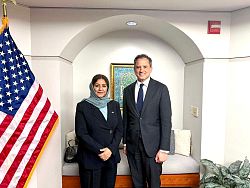
Yemen’s Ambassador to the United States, Jamila Raja, met on Thursday with Robert Palladino, an official in the Bureau of Near Eastern Affairs at the U.S. Department of State, to discuss prospects for strengthening bilateral relations and expanding cooperation between the two countries across a variety of fields.

Magnitude 5 Earthquake Strikes Fiji Islands in the South Pacific
A magnitude 5.0 earthquake struck south of the Fiji Islands in the South Pacific Ocean on Sunday, according to the United States Geological Survey (USGS). The earthquake occurred at a depth of approximately 486.2 kilometers beneath the Earth's surface.

Oil price tops $100 a barrel
Oil prices jumped above $100 per barrel today, Monday, as the U.S. Navy prepares to take control of ship movements in the Strait of Hormuz.

Paris Saint-Germain Crowned UEFA Champions League Winners
French club Paris Saint-Germain claimed the UEFA Champions League title after defeating Arsenal 4-3 in a penalty shootout following a 1-1 draw in the final held at Puskás Aréna in the Hungarian capital, Budapest.
Last Update: ،
2026/06/06
Time
12:27:16
Latest News:
 Minister of Interior Discusses Enhanced Security Cooperation with EU Ambassador
Agriculture Ministry, Renaissance Makers Discuss Joint Projects to Enhance Food and Water Security
Yemeni Ambassador, U.S. Lawmaker Discuss Expanding Bilateral Cooperation
Rights Group Reports Nearly 30,000 Houthi Violations Against Yemeni Children Since 2015
Minister of Education Discusses Strengthening Educational Cooperation with Russian Ambassador
Latest News:
Minister of Interior Discusses Enhanced Security Cooperation with EU Ambassador
Agriculture Ministry, Renaissance Makers Discuss Joint Projects to Enhance Food and Water Security
Yemeni Ambassador, U.S. Lawmaker Discuss Expanding Bilateral Cooperation
Rights Group Reports Nearly 30,000 Houthi Violations Against Yemeni Children Since 2015
Minister of Education Discusses Strengthening Educational Cooperation with Russian Ambassador
President al-Alimi to European Delegation: Treating Houthis as Normal Actor, Structural Error Threatens Perpetuation of Wars, Suffering
[10/02/2026 05:37]
RIYADH – SABA
His Excellency President Dr. Rashad Mohammed al-Alimi, the Chairman of the Presidential Leadership Council,
Has affirmed the Yemeni people’s aspiration for a sustainable, long-term peace that does not bypass the state and does not reproduce violence anew.
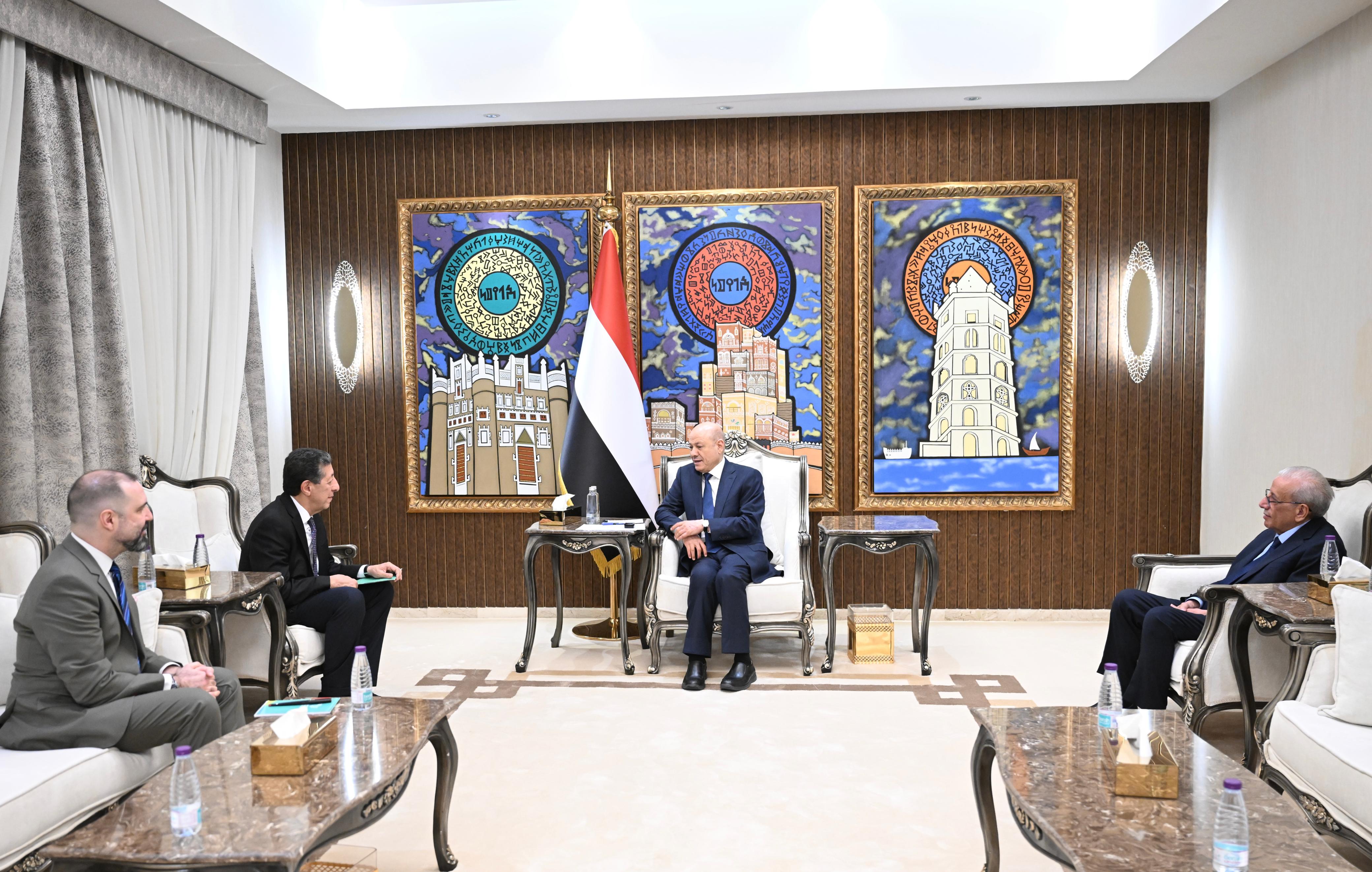
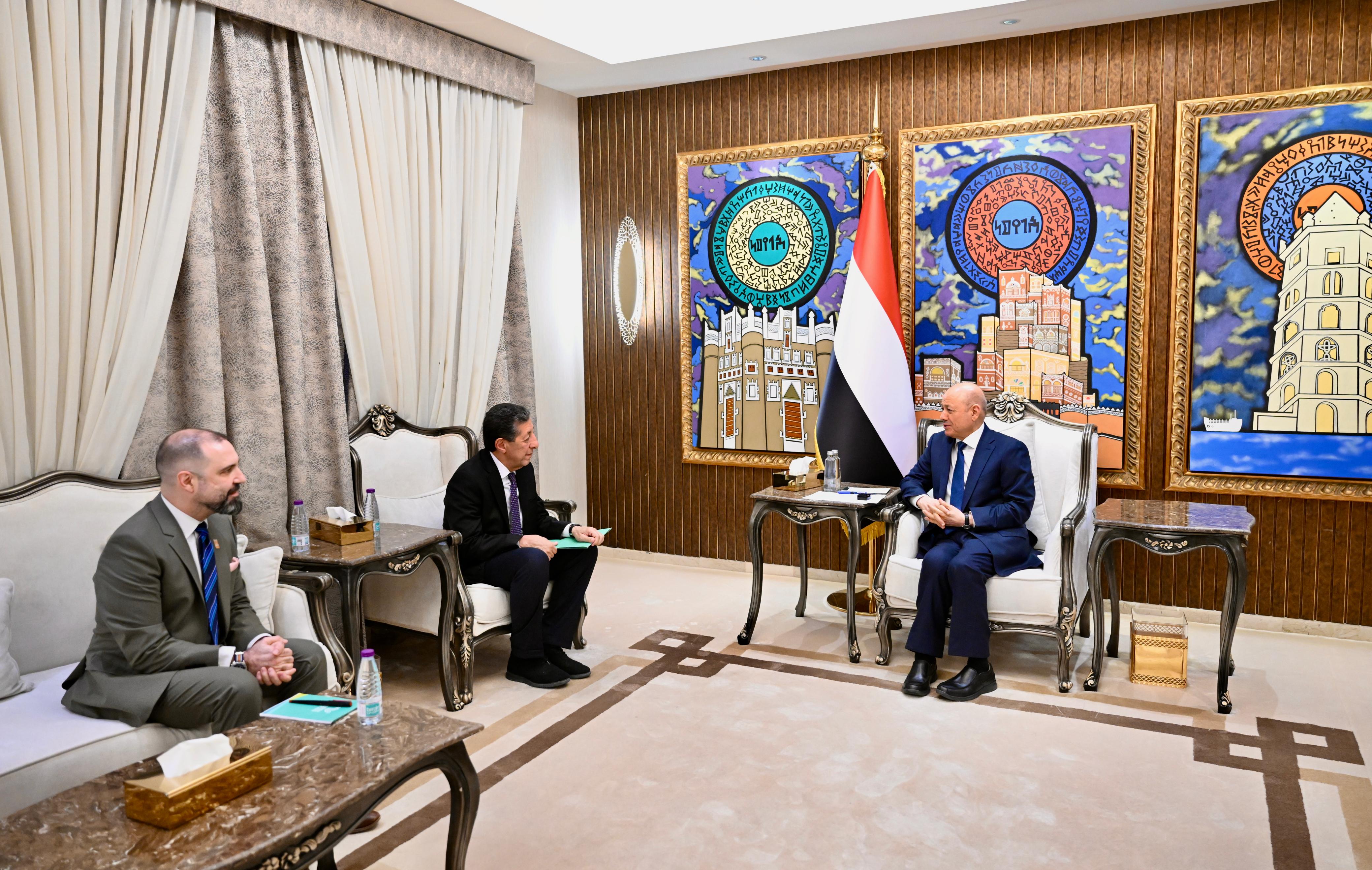
Receiving s delegation from the European Institute of Peace on Tuesday, he explained that there can be no sustainable peace without one state, one weapon, and one decision.
“The European experience has taught us that peace which bypasses the state is merely a temporary truce, and that all peace efforts that ignore this fact end up reproducing war,” he said.
In this context, the President pointed to to Europe’s deep experience in building peace after devastating wars, considering it a laboratory for understanding how to build states after division and how to deter ideological extremism.
He reiterated that the terrorist Houthi militias are not a party to a conflict, but rather a closed ideological group whose agenda is based on lineage-based discrimination, the divine right to rule, and the denial of equal citizenship.
“Here, the European comparison emerges: just as Europe dealt with Nazism and Fascism as an existential threat rather than a political opinion, dealing with the Houthis as a normal actor is a structural error that threatens peace,” he said.
“Accordingly, the peace equation must mean ending ideological weaponization, dismantling the logic of lineage and discrimination, guaranteeing equal citizenship, and establishing a state that protects everyone.”
President al-Alimi considered that any peace without implementation guarantees would reproduce violence, saying: “The required guarantees are the dismantling of the militia’s military and ideological structure, the criminalization of sectarianism and racism in the constitution and the law, preventing the legitimization of faits accomplis by force, and supporting state institutions economically and in terms of security.”
His Excellency emphasized Yemen’s need to move from managing the conflict to addressing its root causes, noting that peace is not made by a balance between a state actor and a militia actor, but by empowering the state and ending the sources of violence and their recurring cycles.
He reaffirmed that Yemenis do not reject peace, but rather reject a peace that is stripped of the state and dignity.
“They want a peace like Europe’s—one that lives on forever, not an agreement that collapses after two years.”
The President also addressed the transformations Yemen has witnessed in the recent period, foremost among them the transition from normalizing division to rebuilding the authority of the state, forming a new government, ending dual power structures, unifying security decision-making, and improving services.
He considered these changes not merely administrative measures, but preliminary conditions for any genuine peace.
In this context, His Excellency praised efforts of the European Institute of Peace and its role in bringing together Yemeni components, tribal leaders, and stakeholders in important discussions on security, peace, the environment, and other issues.
Key words:
” President - Europe’s—one - criminalization - transformations - discrimination - administrative - legitimization - “Accordingly - implementation - Receiving -
Al-Alimi Receives Further Condolences on the Passing of Former President Hadi
UAE Leadership Extends Condolences to Leadership Council Chairman on Passing of Former President
President al-Alimi leads funeral procession of former President Abd-Rabu Mansour Hadi
President al-Alimi Congratulates Kings, Emirs, Presidents of Arab Countries on Eid al-Adha
President al-Alimi Congratulates Eritrea on Independence Anniversary
President al-Alimi: Unity has been Nobel Humanitarian, National Project for Southern, Northern Generations
President Reaffirms State Commitment to Fully Resolving Detainees File
President al-Alimi Appreciates Japanese Support for Comprehensive Recovery Efforts In Yemen
President al-Alimi Praises Constant Development in Yemeni-Russian Relations
President al-Alimi: Dealing with Houthis as Authority of Fait Accompli Means Legitimizing Divine Right, Racism, Weapons Outside State